
Molecular Structure Explorer
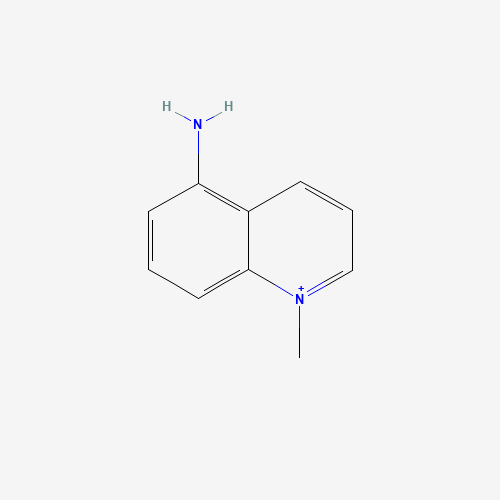
5-Amino-1MQ
Browse every verified compound in our catalog. Swipe, use the arrows or pick a name.
Research library
Peptide & Bioregulator Research Guides
New to the library? Begin with analytical records and evidence, then explore the compound guides below. Educational pages and published COAs are available without signing in.
Incretin & Metabolic Receptor Peptides (GLP-1, GIP, Glucagon, Amylin)8
- RetatrutideGIP/GLP-1/glucagon triple agonist
- TirzepatideDual GIP/GLP-1 receptor agonist
- SemaglutideAcylated GLP-1 analog
- Retatrutide vs Tirzepatide vs SemaglutideSide-by-side comparison
- CagrilintideLong-acting amylin analog
- Cagrilintide + SemaglutideAmylin + GLP-1 (CagriSema)
- NisotirostideLipidated PYY analog
- UBT-251Investigational triple agonist
Tissue-Repair & Cytoskeleton Research Peptides6
Immune & Antimicrobial Peptides4
Mitochondrial & Metabolic Research Compounds12
- MOTS-cMitochondrial-derived peptide
- SS-31 (Elamipretide)Cardiolipin-binding tetrapeptide
- HumaninMitochondrial-derived peptide
- NAD+Coenzyme and enzymology reagent
- B12 CyanocobalaminCobalt corrinoid; vitamin B12, CAS 68-19-9
- 5-Amino-1MQNNMT inhibitor
- AICARAMPK-activating nucleoside
- SLU-PP-332ERR agonist
- GlutathioneReduced GSH tripeptide
- L-CarnitineFatty-acid transport reagent
- AOD-9604Modified hGH 177–191 fragment
- FOXO4-DRISenescence-research peptide
Growth-Hormone Axis & Hormone-Receptor Peptides7
Neuropeptides & Neurotrophic Research7
Copper Peptides & Cosmetic-Science Compounds6
Peptide Bioregulators (Khavinson Peptides)16
- Peptide Bioregulators (overview)All Khavinson-type peptides compared
- Epitalon (Epithalon)Ala-Glu-Asp-Gly (AEDG) – pineal
- VilonLys-Glu (KE) – thymus
- PinealonGlu-Asp-Arg (EDR) – brain
- CortagenAla-Glu-Asp-Pro (AEDP) – cerebral cortex
- CardiogenAla-Glu-Asp-Arg (AEDR) – heart
- LivagenLys-Glu-Asp-Ala (KEDA) – liver
- VesugenLys-Glu-Asp (KED) – blood vessels
- ProstamaxLys-Glu-Asp-Pro (KEDP) – prostate
- TestagenLys-Glu-Asp-Gly (KEDG) – testes
- PancragenLys-Glu-Asp-Trp (KEDW) – pancreas
- CrystagenGlu-Asp-Pro (EDP) – immune tissue
- ChonlutenGlu-Asp-Gly (EDG) – bronchial mucosa
- OvagenGlu-Asp-Leu (EDL) – liver and gastrointestinal tissue
- BronchogenAla-Glu-Asp-Leu (AEDL) – bronchial epithelium
- CartalaxAla-Glu-Asp (AED) – cartilage
Research Blends6
Laboratory Handling1
Analytical Testing1
Additional Incretin-Receptor Research Peptides6
Research Compounds and Laboratory Materials13
- Suvomipic (JXL069)Mitochondrial pyruvate carrier inhibitor
- RU58841Androgen receptor ligand
- KX-826 (Pyrilutamide)Androgen receptor ligand
- CB-03-01 (Clascoterone)Steroidal androgen receptor ligand
- OC000459DP2 / CRTH2 receptor ligand
- SetipiprantDP2 / CRTH2 receptor ligand
- PterostilbeneMethylated stilbene
- PQQ disodiumQuinone cofactor salt
- Propylene glycolLaboratory solvent
- Polysorbate 80Laboratory surfactant
- ATX-034Public registry record not found
- ShilajitMineral-organic mixture
- Mitoprime blendNAD+, MOTS-c, 5-Amino-1MQ
Start here: understand peptide research and testing
New to the library? Begin with analytical records and evidence, then explore the compound guides below. Educational pages and published COAs are available without signing in.
Research use only. Peptide & Bioregulator Research Guides is supplied for laboratory research. It is not a drug, food, cosmetic, or dietary supplement. It is not FDA-approved. It is not for human or veterinary administration. This page does not give a dose or a method of administration. A study cited on this page describes that study’s own test article. It does not make this lot an approved medicine. To check a fact, open the PubMed or DOI link, confirm the authors and year, and match the paper’s compound name, CAS number, or sequence to the specification table. The full method is on the research desk page. Identity and purity for a lot are only what that lot’s certificate of analysis reports. An HPLC percentage is not a sterility result and not an endotoxin result unless the certificate prints those tests.
Reading a COA · Purity and content · HPLC and mass spectrometry · Lot records · Evaluating evidence · Purity, sterility, and endotoxin
How to read a peptide Certificate of Analysis
Start by matching the report’s product designation and lot number to the label on your material. Record the issuing laboratory, report date, sample identifier, methods, units, and results. A report describes the sample and tests listed; it should not be treated as a promise about properties that were not measured.
Keep the original PDF with your laboratory records. If a field is missing or a result is unclear, request clarification before relying on it. Compare the published COA with the corresponding product specifications. Reference: Bachem analytical datasheets and batch records.
HPLC purity is different from net peptide content
HPLC purity usually compares the main peak’s area with the detected chromatographic peaks under specified conditions. It does not directly tell you the mass of peptide in a vial. Water, counterions, and other material can contribute to gross sample weight.
Net peptide content describes the fraction of peptidic material relative to non-peptidic material; it may include peptide impurities. Review purity, content, and the methods separately. Do not convert a purity percentage into a vial amount without the necessary measurements. Reference: Bachem, analysis of peptides.
What HPLC and mass spectrometry can tell you
HPLC separates components and supports a method-specific purity assessment. Mass spectrometry provides molecular mass information used in identity assessment. These methods answer complementary questions, so an identity result and a purity result should be reviewed together.
A single test does not establish every aspect of a material. Read the actual scope of the report rather than assuming that identity and purity tests also establish sterility, biological activity, or suitability for a particular experiment. Reference: Bachem quality-control guide.
Lot traceability and measurement traceability
For your laboratory records, connect the received material to its lot number, original report, receipt date, and storage history. Keep records for separate lots distinct. This practical recordkeeping helps you identify which material was used in an experiment.
Metrological traceability has a narrower meaning: a measurement result is linked to a reference through a documented chain of calibrations, with associated uncertainty. A lot number alone does not establish that chain. Ask for supporting measurement documentation when your work requires it. Reference: NIST metrological traceability.
Read research in its experimental context
For each paper, record the compound identity, experimental model, methods, controls, outcomes, and limitations. Separate structural information from cell studies, animal studies, and human clinical research. Check whether a guide’s summary matches the original publication and whether independent work supports the finding.
Use the references in each compound guide to inspect the original evidence. These educational summaries do not provide dosing or administration instructions. A catalog research material is not interchangeable with a clinical formulation. If a claim lacks a verifiable reference, treat it as unresolved rather than repeating it as established fact.
Library maintenance: Sources are linked so readers can inspect the underlying methods. Report an unclear identifier, outdated source, or missing lot record through our contact page.
Purity, sterility, and endotoxin testing
Three results are often spoken of as if they were one number. They are not. An HPLC purity test reports the main peak’s share of the ultraviolet signal under a stated method. A sterility test, or a faster PCR sterility screen, asks about microorganisms. An endotoxin test asks about bacterial lipopolysaccharide, in endotoxin units, and can be positive in a sample that grew nothing in culture. Water, counterions, and the labeled milligrams are separate again. The equipment, the written standards (USP <621>, <71>, <85>, and <86>, plus ISO/IEC 17025), and how US laboratory accreditation actually works are written out in the peptide analytical testing guide.
Our research guides summarize the published structural and in-vitro literature on every compound we supply — CAS numbers, molecular formulas, sequences, receptor pharmacology and analytical notes. Every product is third-party tested, with lot COAs on our COA page. Catalog codes such as CP-Reta, CP-T, and CP-SEMA are labels on the matching research material. Each guide keeps the published compound name as its heading. Additional incretin-receptor peptides and laboratory materials are included as identity references. They are not current catalog lots.
Jump to: Incretin & Metabolic Receptor Peptides Tissue-Repair & Cytoskeleton Research Peptides Immune & Antimicrobial Peptides Mitochondrial & Metabolic Research Compounds Growth-Hormone Axis & Hormone-Receptor Peptides Neuropeptides & Neurotrophic Research Copper Peptides & Cosmetic-Science Compounds Peptide Bioregulators Research Blends Laboratory Handling Analytical Testing
How the research notes are checked
Mechanism notes on compound guides and product pages name the paper’s authors and link the PubMed record or the DOI. They are written by the Cleared Peptides Research Desk, an editorial desk of Cleared Wellness Group LLC. That is not a personal profile of a physician or a scientist, and it is not a fictional author. Read the checking method, including how a clinical paper differs from a certificate of analysis. Research-use-only language is in the body of each peptide page, not only in a footer.
Shop Research Compounds
Browse all research peptides · GLP-1 research peptides · Bioregulators · Blends
Research Use Only Notice
These guides are provided for educational and laboratory reference purposes. They summarize published, primarily in-vitro and structural research literature and do not describe, recommend or imply any use in humans or animals. Products sold by Cleared Peptides are for laboratory research use only; they are not drugs, foods, cosmetics or dietary supplements, are not FDA-approved, and are not intended to diagnose, treat, cure, mitigate or prevent any disease.
