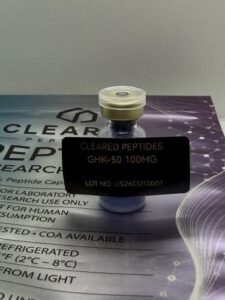
GHK-Cu (Copper Peptide) – Research Grade
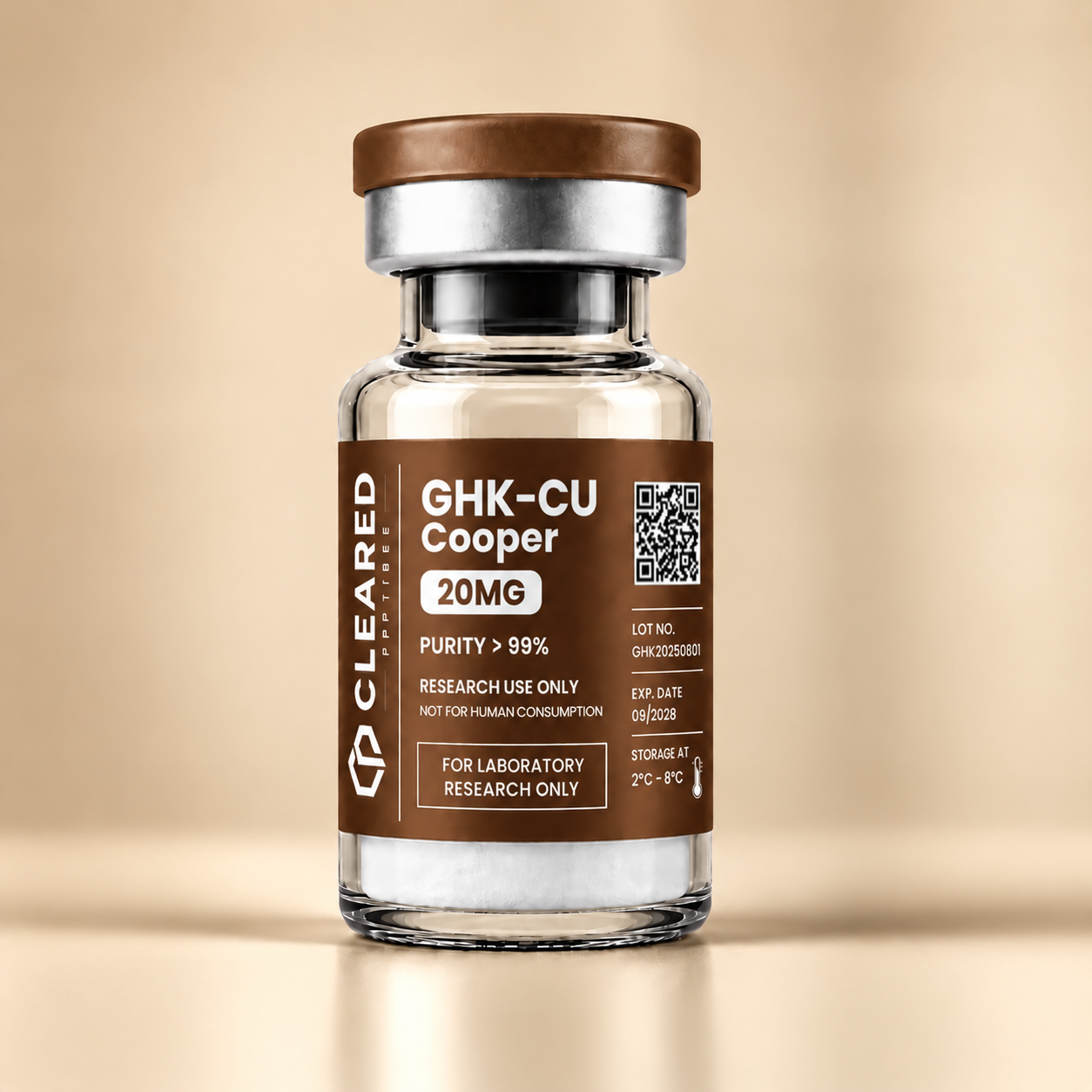
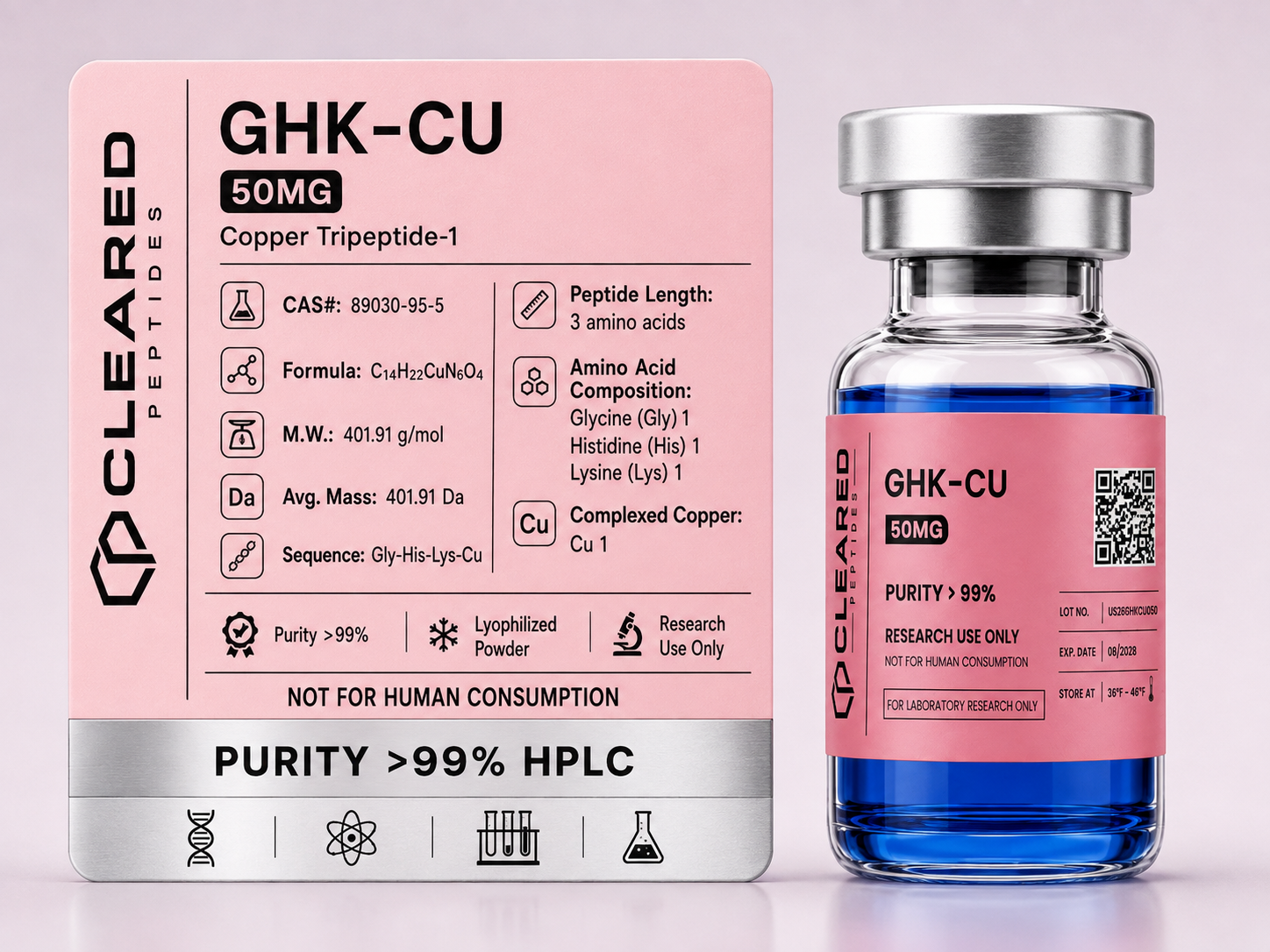
GHK-Cu (Copper Peptide) from Cleared Peptides is a research-grade compound supplied for laboratory and analytical investigation. Every lot is third-party tested, and the batch Certificate of Analysis is published before sale. Specifications, CAS number and molecular formula are listed below.
Research use only. GHK-Cu (Copper Peptide) is supplied for laboratory research. It is not a drug, food, cosmetic, or dietary supplement. It is not FDA-approved. It is not for human or veterinary administration. This page does not give a dose or a method of administration. A study cited on this page describes that study’s own test article. It does not make this lot an approved medicine. To check a fact, open the PubMed or DOI link, confirm the authors and year, and match the paper’s compound name, CAS number, or sequence to the specification table. The full method is on the research desk page. Identity and purity for a lot are only what that lot’s certificate of analysis reports. An HPLC percentage is not a sterility result and not an endotoxin result unless the certificate prints those tests.
GHK-Cu Specifications
| Compound | GHK-Cu |
|---|
| Synonyms | Copper tripeptide-1; Glycyl-L-histidyl-L-lysine copper(II) |
|---|
| CAS Number | 89030-95-5 |
|---|
| PubChem CID | 71587328 |
|---|
| Molecular Formula | C14H22CuN6O4 |
|---|
| Molecular Weight | 401.9 g/mol |
|---|
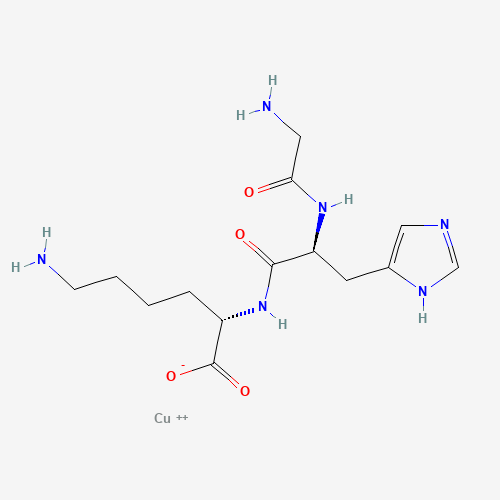
| Sequence / Structure | Gly-His-Lys · Cu(II) |
|---|
| Form | Lyophilized (freeze-dried) powder |
|---|
| Purity | ≥99% by HPLC (verified per batch – see COA) |
|---|
| Storage | Store at −20 °C, sealed, dry and protected from light. Allow vial to reach room temperature before opening. |
|---|
GHK-Cu in Published Research
GHK-Cu is the copper(II) complex of the naturally occurring tripeptide glycyl-L-histidyl-L-lysine. GHK binds Cu(II) with high affinity, and the complex is one of the most studied copper peptides in biochemistry and cosmetic-science research.
Laboratory studies use GHK-Cu in fibroblast and keratinocyte cultures to examine collagen and glycosaminoglycan synthesis, extracellular-matrix remodeling and gene-expression profiles. It is also available as raw powder and in the GLOW and KLOW blends.
This summary describes published laboratory research only and makes no claim about effects in humans or animals.
Purity Testing & Certificate of Analysis
Each lot of GHK-Cu is analyzed by an independent laboratory, with identity and purity (or composition, for multi-component preparations) reported on a lot-specific Certificate of Analysis. View current results on our COA page.
Storage & Laboratory Handling
Store at −20 °C, sealed, dry and protected from light. Allow vial to reach room temperature before opening. Minimize freeze–thaw cycles and handle according to your institution’s chemical-hygiene procedures.
Frequently Asked Questions
Why is GHK-Cu blue?
The blue colour comes from the copper(II) ion chelated by the Gly-His-Lys tripeptide; it is normal for GHK-Cu powder and solutions.
Is GHK-Cu third-party tested?
Yes. Every lot of GHK-Cu is tested by an independent laboratory for identity and purity, and the batch Certificate of Analysis is published on our COA page.
Can I see the GHK-Cu Certificate of Analysis before ordering?
Yes. Lot-specific COAs are posted on our COA page so you can review analytical data before purchase.
What does Research Use Only (RUO) mean?
RUO products are supplied solely for laboratory and analytical research. They are not medicines, are not for human or veterinary use, and no dosing or administration information is provided.
How should GHK-Cu be stored?
Store at −20 °C, sealed, dry and protected from light. Allow vial to reach room temperature before opening.
Research Guides
Learn more: GHK-Cu research guide
Selected References
Peer-reviewed literature on GHK-Cu Copper Peptide, listed as scientific background for laboratory researchers. Citation does not imply endorsement by the authors or any use other than in-vitro research.
- Mehr A, et al. The copper(II)-binding tripeptide GHK, a valuable crystallization and phasing tag for macromolecular crystallography. Acta Crystallogr D Struct Biol. 2020;76(Pt 12):1222-1232. PubMed 33263328 · DOI
- Hureau C, et al. X-ray and solution structures of Cu(II) GHK and Cu(II) DAHK complexes: influence on their redox properties. Chemistry. 2011;17(36):10151-60. PubMed 21780203 · DOI
Related Research Compounds
Research Use Only
For laboratory research use only. This product is not a drug, food, cosmetic or dietary supplement, is not FDA-approved, and is not intended for human or veterinary use or for the diagnosis, treatment, cure, mitigation or prevention of any disease. No dosing, administration or therapeutic information is provided. Sold only to qualified researchers; the purchaser is responsible for safe handling and compliance with all applicable laws and institutional requirements.