
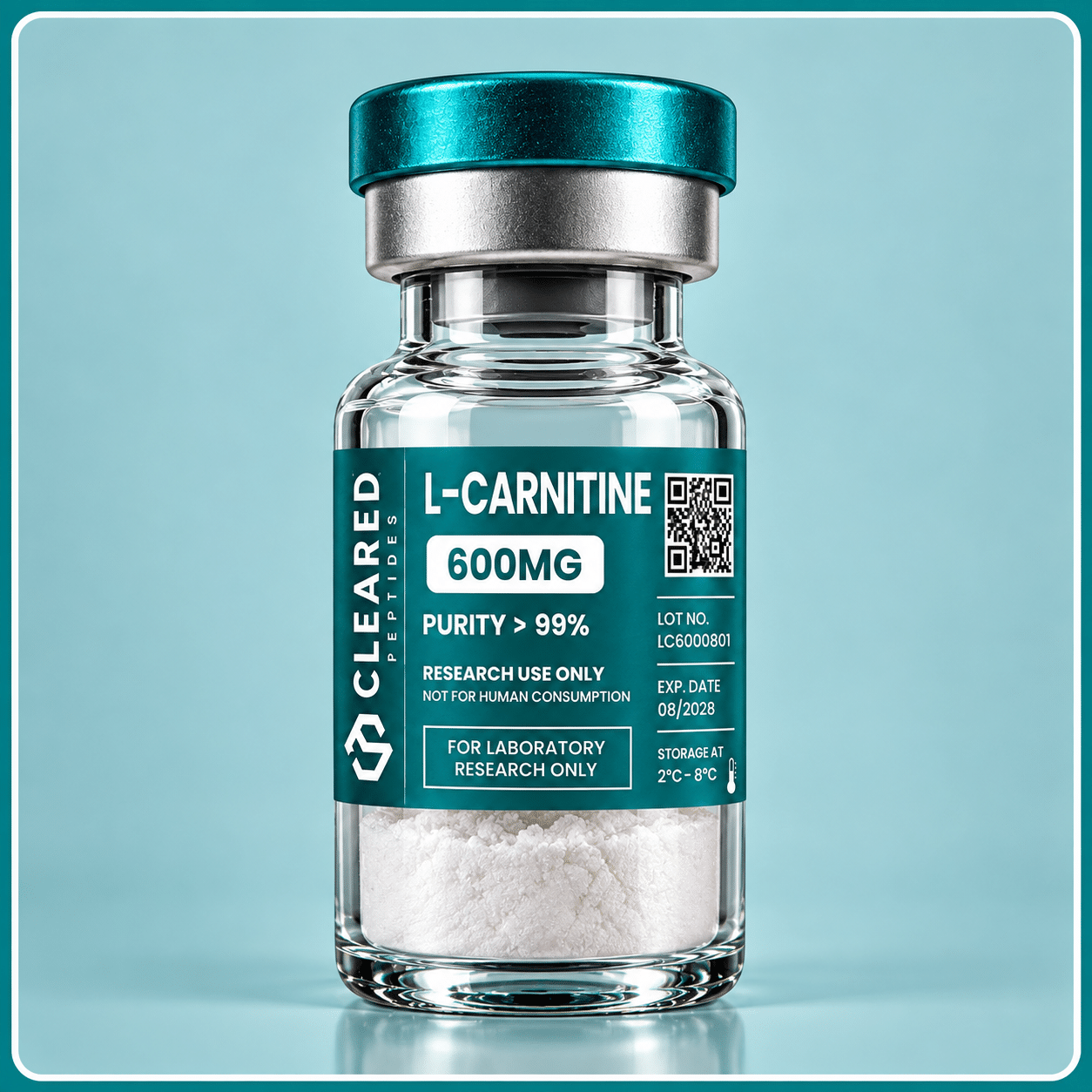
L-Carnitine
Original price was: $75.00.$40.00Current price is: $40.00.
Discount per quantity
| Quantity | 2 | 3 | 4 | 5 | 10 - 15 |
|---|---|---|---|---|---|
| Price | $36.00 | $34.00 | $32.00 | $30.00 | $28.00 |
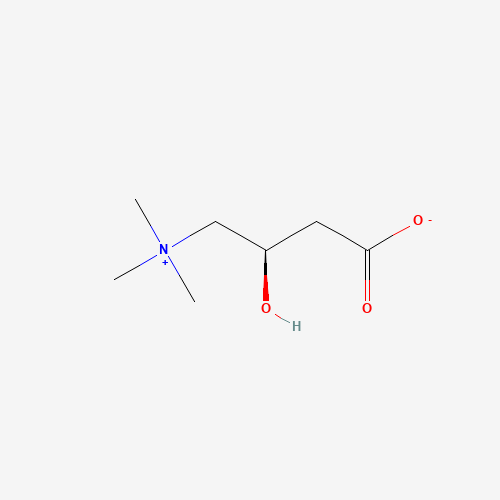
Molecular Structure Explorer
L-Carnitine
Structure of the compound on this page.
Product Details
L-Carnitine – Research Grade
L-Carnitine from Cleared Peptides is a research-grade compound supplied for laboratory and analytical investigation. Every lot is third-party tested, and the batch Certificate of Analysis is published before sale. Specifications, CAS number and molecular formula are listed below.
Research use only. L-Carnitine is supplied for laboratory research. It is not a drug, food, cosmetic, or dietary supplement. It is not FDA-approved. It is not for human or veterinary administration. This page does not give a dose or a method of administration. A study cited on this page describes that study’s own test article. It does not make this lot an approved medicine. To check a fact, open the PubMed or DOI link, confirm the authors and year, and match the paper’s compound name, CAS number, or sequence to the specification table. The full method is on the research desk page. Identity and purity for a lot are only what that lot’s certificate of analysis reports. An HPLC percentage is not a sterility result and not an endotoxin result unless the certificate prints those tests.
L-Carnitine Specifications
| Compound | L-Carnitine |
|---|---|
| Synonyms | Levocarnitine; β-hydroxy-γ-trimethylaminobutyric acid |
| CAS Number | 541-15-1 |
| PubChem CID | 10917 |
| Molecular Formula | C7H15NO3 |
| Molecular Weight | 161.2 g/mol |
| Sequence / Structure | Amino-acid derivative (not a peptide) |
| Form | As supplied (see product options) |
| Purity | ≥98% (verified per batch – see COA) |
| Storage | Store at room temperature, tightly sealed, protected from moisture. |
L-Carnitine in Laboratory Research
L-Carnitine (levocarnitine) is a quaternary-ammonium compound that shuttles long-chain fatty acids into mitochondria as acyl-carnitines.
It is used as a reagent in fatty-acid-oxidation, carnitine-palmitoyltransferase and acyl-carnitine analytical research.
This summary describes published laboratory research only and makes no claim about effects in humans or animals.
Purity Testing & Certificate of Analysis
Each lot of L-Carnitine is analyzed by an independent laboratory, with identity and purity (or composition, for multi-component preparations) reported on a lot-specific Certificate of Analysis. View current results on our COA page.
Storage & Laboratory Handling
Store at room temperature, tightly sealed, protected from moisture. Minimize freeze–thaw cycles and handle according to your institution’s chemical-hygiene procedures.
Frequently Asked Questions
Is L-Carnitine third-party tested?
Yes. Every lot of L-Carnitine is tested by an independent laboratory for identity and purity, and the batch Certificate of Analysis is published on our COA page.
Can I see the L-Carnitine Certificate of Analysis before ordering?
Yes. Lot-specific COAs are posted on our COA page so you can review analytical data before purchase.
What does Research Use Only (RUO) mean?
RUO products are supplied solely for laboratory and analytical research. They are not medicines, are not for human or veterinary use, and no dosing or administration information is provided.
How should L-Carnitine be stored?
Store at room temperature, tightly sealed, protected from moisture.
{
“@context”: “https://schema.org”,
“@type”: “FAQPage”,
“mainEntity”: [
{
“@type”: “Question”,
“name”: “Is L-Carnitine third-party tested?”,
“acceptedAnswer”: {
“@type”: “Answer”,
“text”: “Yes. Every lot of L-Carnitine is tested by an independent laboratory for identity and purity, and the batch Certificate of Analysis is published on our COA page.”
}
},
{
“@type”: “Question”,
“name”: “Can I see the L-Carnitine Certificate of Analysis before ordering?”,
“acceptedAnswer”: {
“@type”: “Answer”,
“text”: “Yes. Lot-specific COAs are posted on our COA page so you can review analytical data before purchase.”
}
},
{
“@type”: “Question”,
“name”: “What does Research Use Only (RUO) mean?”,
“acceptedAnswer”: {
“@type”: “Answer”,
“text”: “RUO products are supplied solely for laboratory and analytical research. They are not medicines, are not for human or veterinary use, and no dosing or administration information is provided.”
}
},
{
“@type”: “Question”,
“name”: “How should L-Carnitine be stored?”,
“acceptedAnswer”: {
“@type”: “Answer”,
“text”: “Store at room temperature, tightly sealed, protected from moisture.”
}
}
]
}
{
“@context”: “https://schema.org”,
“@type”: “FAQPage”,
“mainEntity”: [
{
“@type”: “Question”,
“name”: “Is L-Carnitine third-party tested?”,
“acceptedAnswer”: {
“@type”: “Answer”,
“text”: “Yes. Every lot of L-Carnitine is tested by an independent laboratory for identity and purity, and the batch Certificate of Analysis is published on our COA page.”
}
},
{
“@type”: “Question”,
“name”: “Can I see the L-Carnitine Certificate of Analysis before ordering?”,
“acceptedAnswer”: {
“@type”: “Answer”,
“text”: “Yes. Lot-specific COAs are posted on our COA page so you can review analytical data before purchase.”
}
},
{
“@type”: “Question”,
“name”: “What does Research Use Only (RUO) mean?”,
“acceptedAnswer”: {
“@type”: “Answer”,
“text”: “RUO products are supplied solely for laboratory and analytical research. They are not medicines, are not for human or veterinary use, and no dosing or administration information is provided.”
}
},
{
“@type”: “Question”,
“name”: “How should L-Carnitine be stored?”,
“acceptedAnswer”: {
“@type”: “Answer”,
“text”: “Store at room temperature, tightly sealed, protected from moisture.nnn{n “@context”: “https://schema.org”,n “@type”: “FAQPage”,n “mainEntity”: [n {n “@type”: “Question”,n “name”: “Is L-Carnitine third-party tested?”,n “acceptedAnswer”: {n “@type”: “Answer”,n “text”: “Yes. Every lot of L-Carnitine is tested by an independent laboratory for identity and purity, and the batch Certificate of Analysis is published on our COA page.”n }n },n {n “@type”: “Question”,n “name”: “Can I see the L-Carnitine Certificate of Analysis before ordering?”,n “acceptedAnswer”: {n “@type”: “Answer”,n “text”: “Yes. Lot-specific COAs are posted on our COA page so you can review analytical data before purchase.”n }n },n {n “@type”: “Question”,n “name”: “What does Research Use Only (RUO) mean?”,n “acceptedAnswer”: {n “@type”: “Answer”,n “text”: “RUO products are supplied solely for laboratory and analytical research. They are not medicines, are not for human or veterinary use, and no dosing or administration information is provided.”n }n },n {n “@type”: “Question”,n “name”: “How should L-Carnitine be stored?”,n “acceptedAnswer”: {n “@type”: “Answer”,n “text”: “Store at room temperature, tightly sealed, protected from moisture.”n }n }n ]n}”
}
}
]
}
Selected References
Peer-reviewed literature on L-Carnitine, listed as scientific background for laboratory researchers. Citation does not imply endorsement by the authors or any use other than in-vitro research.
- Sweeney JD, et al. L-carnitine and its possible role in red cell and platelet storage. Transfus Med Rev. 2004;18(1):58-65. PubMed 14689378 · DOI
Related Research Compounds
- MOTS-c
- SS-31 (Elamipretide)
- MOTS-c + SS-31 Research Set
- NAD+ (Nicotinamide Adenine Dinucleotide)
- 5-Amino-1MQ
- AICAR
- SLU-PP-332
Research Use Only
For laboratory research use only. This product is not a drug, food, cosmetic or dietary supplement, is not FDA-approved, and is not intended for human or veterinary use or for the diagnosis, treatment, cure, mitigation or prevention of any disease. No dosing, administration or therapeutic information is provided. Sold only to qualified researchers; the purchaser is responsible for safe handling and compliance with all applicable laws and institutional requirements.
Related Products


